Dr. Gymbro
←

#protein supplementation

1 article
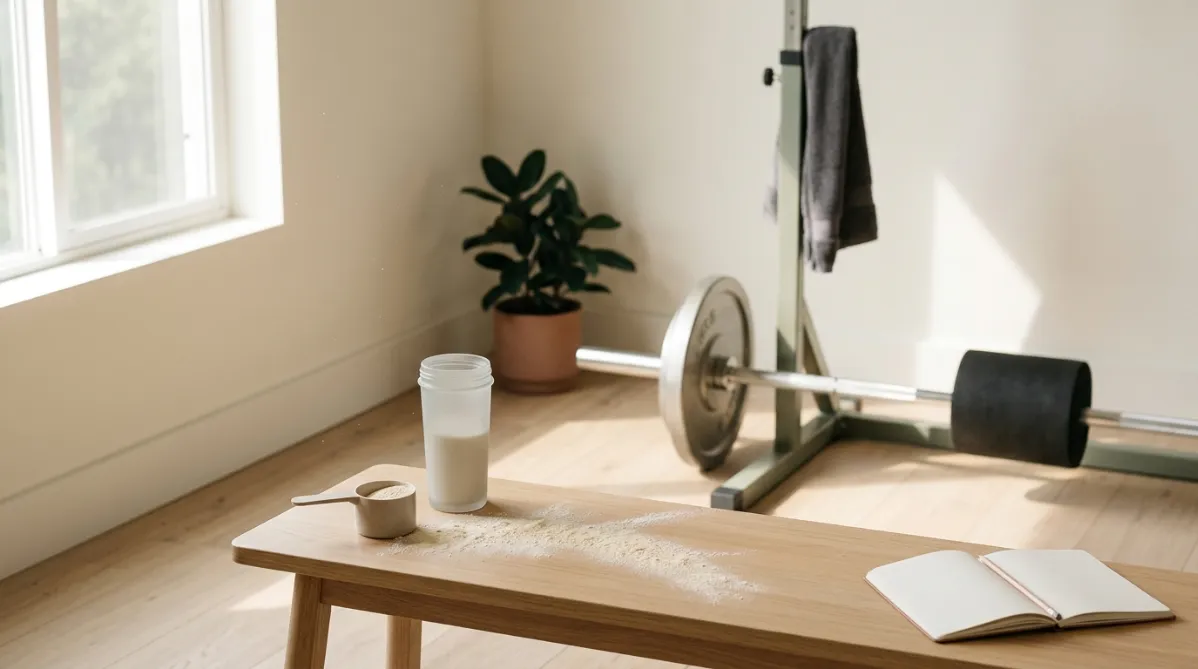
A wide, softly lit editorial photograph of a minimalist home gym corner with pale oak flooring and a warm off-white wall. In the foreground on a light wooden bench sits a matte ceramic scoop resting beside a simple frosted glass shaker bottle, with a delicate dusting of fine cream-colored protein powder spilled across the wood in a natural, casual arc. In the soft-focus midground, a loaded barbell rests on a squat rack with brushed steel plates, and a neatly folded charcoal towel hangs over the rack's upright. To the right, a small open notebook with a pencil lies on the bench, suggesting tracked training logs, with no legible text. Morning sunlight streams diagonally through a large window on the left, casting long gentle shadows and a warm golden glow across the scene, with subtle dust motes floating in the light. The color palette is muted and modern: sage green, warm sand, soft terracotta, and cream, with a single accent of deep forest green from a potted plant in the background corner. Shallow depth of field, crisp detail on the powder and scoop, creamy bokeh on the barbell. Shot as if with a 50mm lens at f/2, natural film-like grain, clean negative space on the upper right for headline overlay. The mood is calm, thoughtful, and science-minded, with a contemporary wellness magazine aesthetic, realistic and tactile, with no people, no logos, and no text.
nutrition

La proteina in polvere aumenta la forza? 23 studi svelano il segreto

BY DR. GYMBRO ·

Aggiungere la proteina in polvere al tuo allenamento ti rende davvero più forte? Una meta‑analisi del 2026 su 23 studi randomizzati e 611 giovani adulti ha evidenziato un vantaggio medio di 7,4 kg nello squat e 2,6 kg nella panca. Il beneficio nello squat è stato più evidente in programmi di 12 settimane o meno e in studi in cui le proteine sono state assunte intorno all’allenamento e prima di dormire. Tuttavia il segnale temporale è solo borderline, non è stata identificata una dose ottimale e gli autori sottolineano che il vantaggio è condizionato, non universale. Ecco cosa i dati supportano e cosa no.

This page is available in